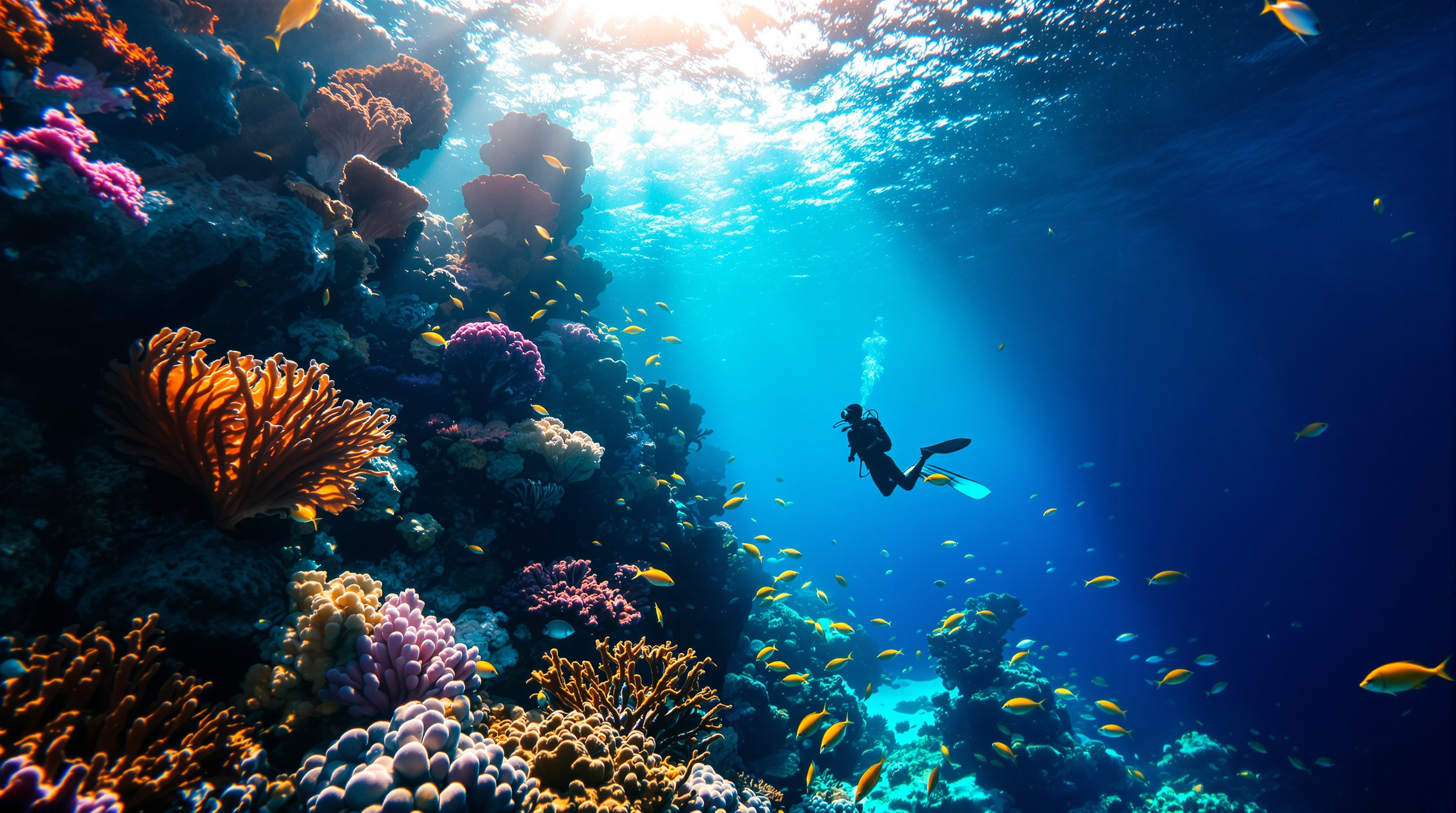
Coral Bleaching and the San Andres Reef
Understand the global bleaching reports, what recovery means, and how coral planting in the Cove fits into the wider story of the reef you have come to see.
A clear view through your mask is a lovely start to a reef visit, but understanding coral means thinking about stress as well as scenery. The global bleaching reports give useful context for San Andres. Read them alongside questions about the particular place you will dive or snorkel, and approach the reef gently.
What bleaching is
Think of coral bleaching as a warning of stress, with heat stress central to NOAA's account of the fourth global event. Bleaching does not necessarily mean that the coral will die. In its April 2024 announcement, NOAA explained that corals can recover if the stress driving bleaching diminishes. The possibility of recovery is a reason to care about a stressed reef.
For your visit, keep that distinction in mind when talking about what you see. Ask a guide to explain the coral at the site rather than deciding that a pale area is beyond help. A brief look underwater is a starting point for questions; avoid turning it into a confident account of the whole reef's future.
The fourth global event, 2023-2025
On 15 April 2024, NOAA confirmed the fourth global coral bleaching event on record, the second in ten years. Mass bleaching had been confirmed since early 2023 across the Caribbean and the eastern Tropical Pacific, including Colombia. That announcement describes a broad regional and global problem; keep its scale in mind when relating it to a holiday on San Andres.
The later NOAA Coral Reef Watch assessment dated 2 June 2026 says the fourth event likely ended in 2025. From 1 January 2023 to 30 September 2025, bleaching-level heat stress affected approximately 84.4% of the world's coral reef area, and mass bleaching was documented in at least 83 countries and territories. NOAA identifies it as the largest global event on record.
Those figures describe different things: the area exposed to bleaching-level heat stress, and the places where mass bleaching was documented. The 84.4% figure is not a percentage of coral that died. For comparison, NOAA puts the heat-stress footprint of the third global event, in 2014-2017, at 68.2% of reef area. The first two events occurred in 1998 and 2010.
Recovery is possible
NOAA's wording matters: corals can recover if the stress eases. Keep that possibility separate from an assumption that every affected reef is healthy again. Likewise, the assessment that a global event likely ended in 2025 is a statement about that event, rather than a condition report for the individual reef you plan to visit.
Before a dive or snorkel, ask what your guide has observed at that site and how to keep clear of the coral. Let the briefing shape your route and your expectations. You can enjoy the water while taking an interest in its condition, without expecting one swim to answer every question raised by a global report.
Coral planting in the Cove
There is a local example of hands-on reef work in a departmental account from September 2025. Fundación Green Souls, working with Coralina and the Cove fishermen's association, led coral planting and fragmentation activities. Young people then took part in a dive to plant coral fragments. The account links the reef's importance to fishing sustainability, coastal protection and the archipelago's natural richness.
Read that as a particular planting activity, rather than a measure of recovery across San Andres. As a visitor, observe any work area from a respectful distance and leave fragments and equipment alone. Ask questions about coral gardening without treating it as an invitation to handle coral yourself.
How to dive and snorkel gently
Give yourself room to observe without touching. Keep fins, hands and camera clear of the coral, and resist the temptation to brace yourself against the bottom for a photograph. If a shot requires contact, let it go. Follow the guide's route and ask for help keeping your position if you find yourself drifting too close.
Leave coral fragments where they are, keep your attention on your movements as well as the view, and carry your rubbish back with you. For planning the time you spend underwater, the diving and snorkelling guide covers the island's reef visits, while The Island puts the reef in its wider setting.